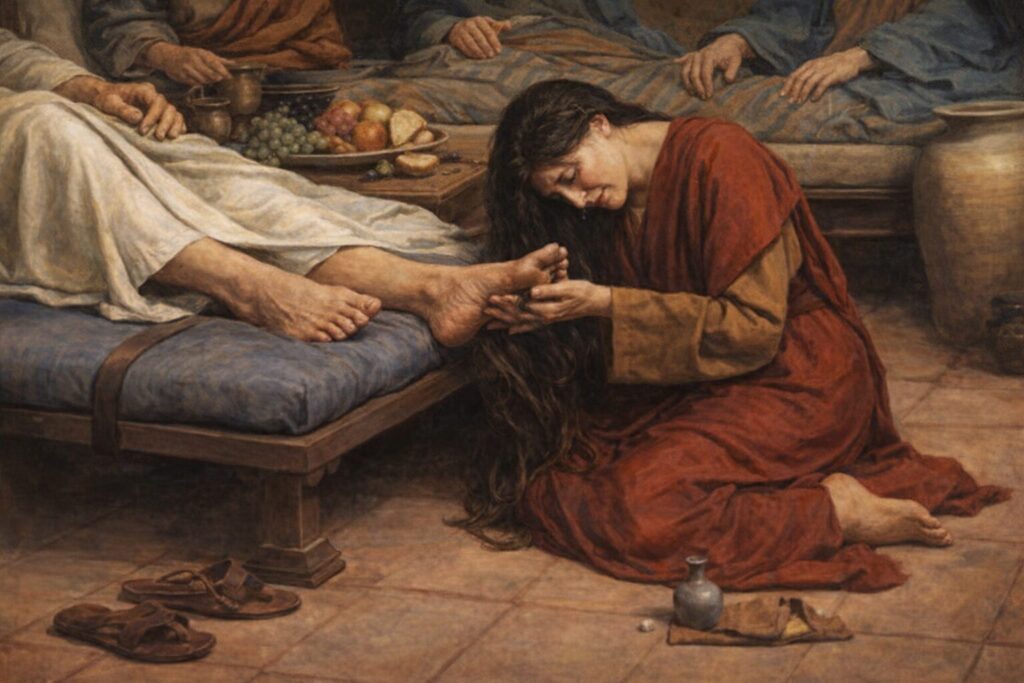
In Luke 7:36–50, an unnamed woman — unwanted, uninvited, and labeled a “sinner” — crashes a dinner party hosted by Simon, a self-righteous Pharisee. To understand just how radical this encounter is, we need to step into its cultural context.
In first-century Judea, dinner guests reclined on cushions around a low platform, feet stretched out behind them. Such gatherings were semi-public, meaning outsiders could slip in and observe. This woman seized that opportunity. She entered a space where she did not belong, carrying one of her most precious possessions — an alabaster flask of expensive perfume.
She did not approach Jesus with a demand, but with a desperation that transcended social shame. Standing behind him, she wept, bathing his feet with her tears, drying them with her hair, kissing them, and anointing them with the perfume. The text does not specify the nature of her sin — only that she was known as a sinner. Yet in the presence of Jesus, deep conviction and remorse poured out of her in tears.
Simon watched in scandalized silence. His objection was not merely personal disgust but a theological crisis: a true prophet, he reasoned, would never allow a ritually unclean person to touch him. In Simon’s worldview, holiness meant keeping the “dirty” at a safe distance.
Jesus dismantled this logic — not with anger, but with a parable. He described two debtors, one forgiven a great debt and one a small one, and asked Simon which would love more. Simon answered correctly: the one forgiven most. That was precisely the point. The woman’s extravagant act was not a payment to earn Jesus’ favor — it was the inevitable overflow of a heart that understood how much she had been released from. She loved much because she had been forgiven much. Simon, who felt he owed little, loved little.
Jesus was teaching something that overturned the religious logic of his day: true holiness is not about avoiding contamination. It is about the power to transform. He did not shrink from her presence — he embraced it, and declared, “Your sins are forgiven. Your faith has saved you. Go in peace.”
This story confronts us on two fronts.
First, where are we like the woman? Have we been labeled, rejected, or told we are too far gone? This story declares that no amount of shame is greater than his grace. We can approach him exactly as we are.
Second — and more uncomfortably — where are we like Simon? Do we prioritize correct behavior over compassionate engagement? Do we quietly want Jesus to join us in condemning the “other,” people different from us whom we have already written off? Jesus does not call the righteous. He calls sinners. And in doing so, he invites us to stop judging the broken and start loving them — risking our own reputations to extend the same grace we so desperately need ourselves.
Leave a Comment