Skip to content

Category: mission

Christianity in Iran: An Ancient Faith That Never Disappeared

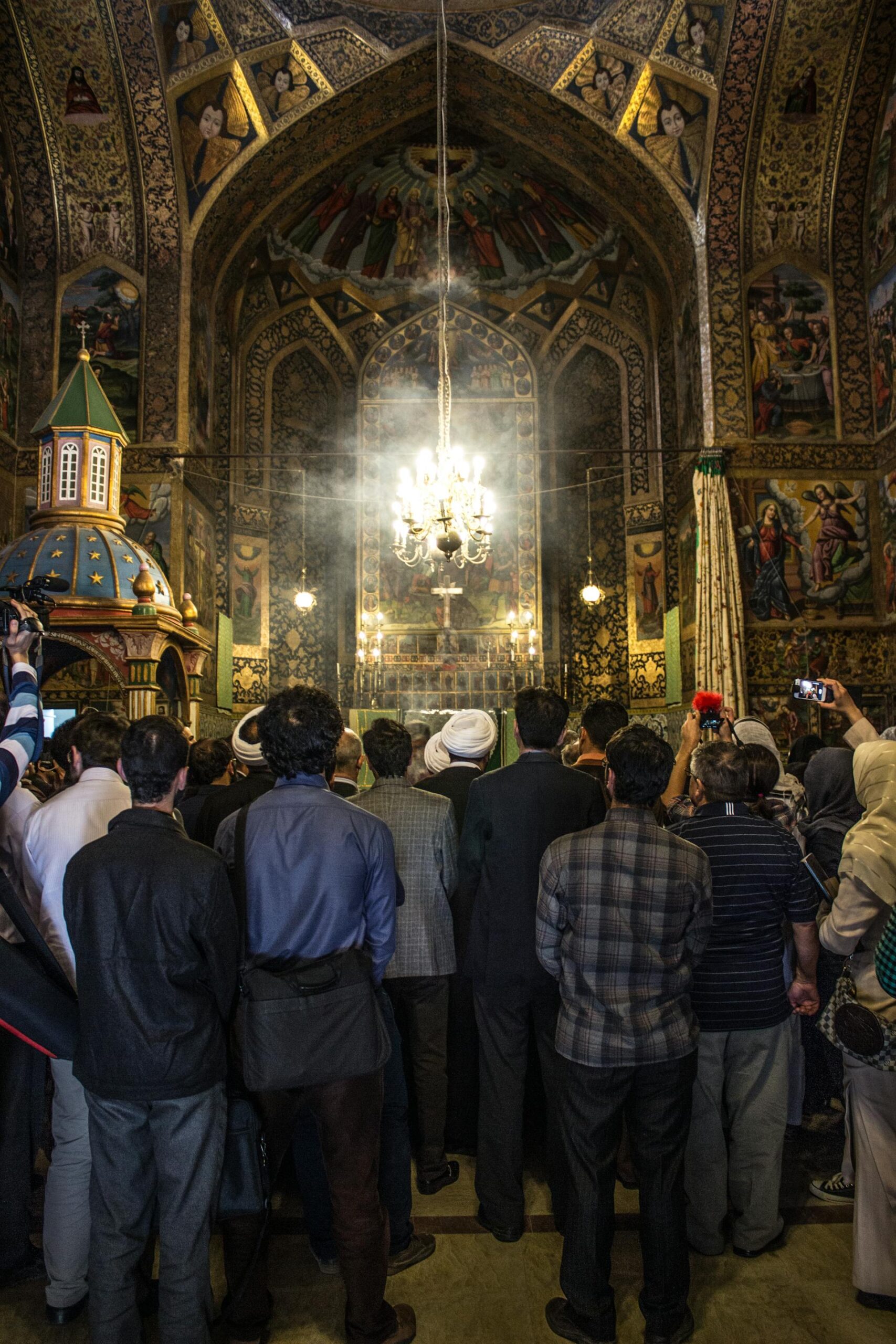
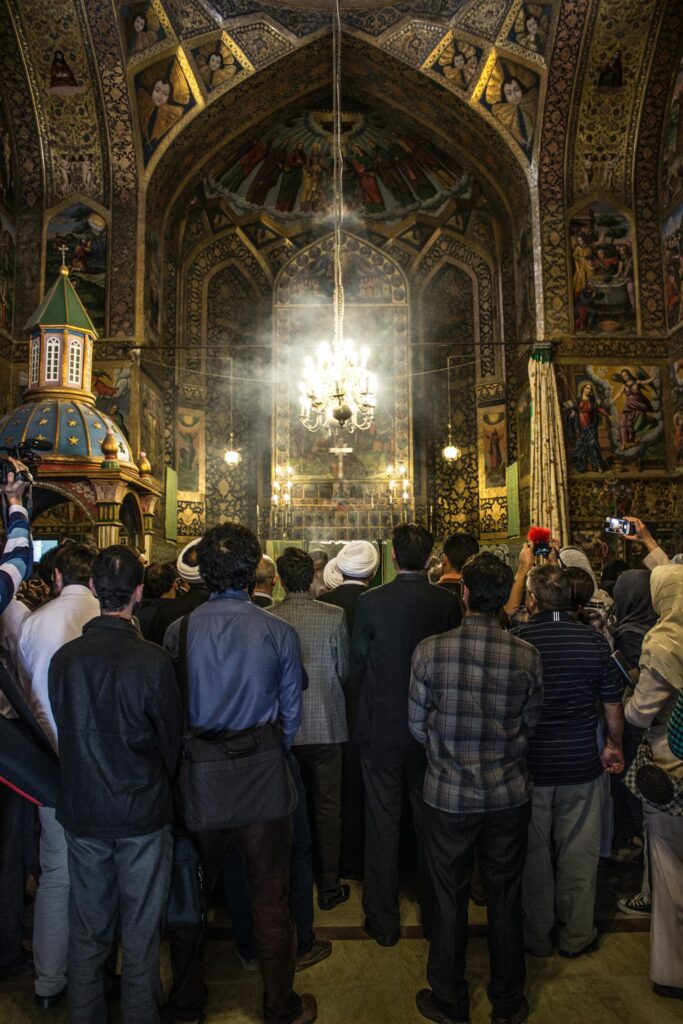
Church in Isfahan, Iran, Photo by Mehdi Khoshnejad: https://www.pexels.com/photo/diverse-congregation-inside-armenian-church-33701903/

Recently, I saw a pastor’s social media post that said, “As a result of today’s [February 28th, 2026] actions led by the USA and Israel, soon Iran will be open for us to preach the Gospel of Jesus Christ within their borders.” This kind of ignorance about Iran and the gospel is quite widespread in some Evangelical circles, as people often think about the history of Christianity in relation to Rome, Byzantium, or medieval Europe. Yet some of the oldest and most enduring Christian traditions developed far to the east—in the lands that now form modern Iran.

The story of Christianity in Iran stretches back nearly two thousand years. It is a story marked by remarkable expansion, cultural exchange, long periods of hardship, and a remarkable revival in recent decades. Above all, it reveals how a church can adapt and survive within changing and adverse political and cultural landscapes.

The Earliest Roots

The connection between Christianity and the Iranian world appears almost immediately in the New Testament itself. In the Acts of the Apostles, the crowd gathered in Jerusalem at Pentecost included people from Parthia, Media, and Elam—regions that correspond broadly to parts of modern Iran (cf. Acts 2:9). If this account reflects historical reality, Iranians were present when the Christian message was first proclaimed beyond the small circle of Jesus’ earliest followers.

Traditions preserved in Syriac Christian writings later expanded on this early connection. According to these accounts, the Apostles Thaddeus and Bartholomew traveled eastward and preached in territories that lay within the Persian cultural sphere. Historians debate the exact details of these traditions, but there is little doubt that Christian communities existed in Persia by the first centuries of the church.

By the second century, these communities had developed a recognizable structure. The bishop of Ctesiphon—the capital of the Sasanian Empire—emerged as the leading authority among Persian Christians and eventually took the title of Catholicos, and later Patriarch. From this center developed what historians now call the Church of the East, a church that grew largely independent from the Christian institutions of the Roman and Byzantine worlds.

This independence shaped the character of Christianity in Iran. Rather than simply copying the forms of Christianity that emerged in the Mediterranean, Persian Christians developed institutions, leadership structures, and theological traditions suited to life within the Sasanian Empire.

Christianity on the Silk Road

One of the most remarkable aspects of Iranian Christianity is how far it spread. From the Persian heartland, Christian missionaries traveled east along the Silk Road, establishing communities across Central Asia and eventually reaching China.

The most famous testimony to this early global presence is the Xi’an Stele, erected in China in AD 781. The inscription recounts how Christian missionaries from the Persian Church of the East arrived in the Tang Empire centuries earlier and established churches there. It stands today as one of the clearest pieces of evidence that Christianity had become a global faith long before the European missionary era.

This expansion also encouraged a process of cultural blending. Christian communities adopted local languages, interacted with Persian intellectual traditions, and adapted their practices to the societies around them. Rather than existing as isolated enclaves, they became part of a broader network of religious and cultural exchange across Asia.

Even today, physical reminders of this early history remain in Iran. Among the most notable is the Monastery of St. Thaddeus, sometimes called Qara Kelisa or the “Black Church.” Dating back at least to the fourth or fifth century, it is one of the oldest surviving Christian sites in the region and a reminder of how deeply rooted Christianity once was in the Iranian world.

Continuity Amidst Political Upheaval in the Later Centuries

Over the centuries, Christianity in Iran developed into a mosaic of different communities, each with its own language and traditions.

For much of late antiquity and the medieval period, the Assyrian Church of the East formed the backbone of Iranian Christianity. Its clergy wrote theological works in Syriac, trained scholars, and maintained networks of churches that extended far beyond Persia itself.

Another major Christian presence was the Armenian Apostolic Church. Armenians had lived in the region for centuries, but their role expanded dramatically during the Safavid era in the seventeenth century. Shah Abbas I relocated large numbers of Armenian merchants to the newly established district of New Julfa in Isfahan. New Julfa quickly became a thriving Armenian community. Its merchants operated trading networks that connected Iran with Europe and Asia, while its churches and schools turned it into one of the most vibrant Christian cultural centers in the Middle East.

Other traditions followed. The Chaldean Catholic Church emerged through union with Rome in the sixteenth century. In the nineteenth century, Protestant missionaries arrived as well, establishing schools, printing presses, and hospitals. The American missionary Justin Perkins, for example, founded educational and publishing institutions in Urmia that helped produce Christian literature in local languages and train indigenous clergy.

These communities illustrate a key feature of Iranian Christianity: its ability to adapt to new circumstances while maintaining continuity with older traditions.

Hard Times and Survival

Christian communities in Iran have rarely enjoyed a completely stable existence. Their history includes long periods of tolerance, but also episodes of persecution and political pressure.

One of the earliest major crises occurred during the fourth century under the Sasanian ruler Shapur II, when Christians were targeted amid tensions between the Persian Empire and the Christian Roman world. Later, after the Arab conquest of the seventh century, Christians became part of the dhimmi system, which recognized them as protected minorities but placed them in a subordinate legal position.

The upheavals of later centuries were often even more devastating. The campaigns of Timur in the fourteenth century destroyed many Christian communities across the region. In the early twentieth century, the Armenian and Assyrian genocides during the collapse of the Ottoman Empire killed hundreds of thousands and forced large populations to flee.

Despite these shocks, Christianity did not disappear from Iran. Armenians, Assyrians, and other communities continued to maintain churches, schools, and cultural institutions, preserving a heritage that stretched back more than a millennium. Moreover, as per Article 64 of Iran’s constitution, Christians receive three of the five guaranteed reserved seats in the Parliament (Majlis) allocated for the recognized minorities.

Christianity in Modern Iran

The Iranian Revolution of 1979 transformed the country’s political and religious environment. The new constitution recognized Armenians and Assyrian-Chaldeans as official religious minorities with the right to maintain churches and representation in parliament. At the same time, conversion from Islam remained legally sensitive and sometimes dangerous. These restrictions led many historic Christian communities to emigrate, forming large diaspora populations in Europe, North America, and Australia.

Yet in an unexpected twist, which can only be attributed to the work of the Holy Spirit, Christianity has also experienced new interest within Iran itself. In recent decades, small groups of Persian-speaking Christians have begun meeting in informal house churches, often gathering quietly in private homes rather than traditional church buildings, as was the norm in the early church. The spread of digital communication has accelerated this process. Persian-language Bibles, sermons, and theological discussions circulate widely through satellite television and online platforms, allowing people to explore Christian teaching privately.

However, I will not venture on to quantify the number of Christians in this new growth as the numerical measuring of the movement is extremely difficult, since many communities operate quietly and without formal institutions. Even so, a growing body of research suggests that a small but notable number of Iranians have adopted Christian beliefs in recent decades. I like to term it as believing in Christ without belonging to the institutionalized church (Cf. John, Vinod: Believing Without Belonging?, 2020).

An Ongoing Story

Considering this historical sketch, Christianity in Iran is not simply a story of survival. It is a story of adaptation, cultural exchange, and resilience across two millennia of political change.

From its early beginnings in the apostolic era, to its role in spreading Christianity across Asia, to the endurance of Armenian and Assyrian communities, and the current unprecedented growth of the non-institutional faith, Iranian Christianity has continually reshaped itself in response to the world around it.

Today, historians increasingly view Iran as an important case study in the broader history of global Christianity. It demonstrates how religious traditions can persist—and sometimes even grow—in circumstances that appear unfavorable.

The full story is still being uncovered as the complex heritage of Christianity in Iran continues to come into clearer view. What is already evident, however, is that this ancient tradition remains an integral part of the wider history of Christianity—and a reminder of the enduring power of the Gospel to not only survive but thrive across centuries of change.


Selected Sources

  1. Adang, C., & Schmidtke, S. (2010). Contacts and Controversies between Muslims, Jews and Christians in the Ottoman Empire and Pre-Modern Iran.
  2. Baghdiantz-MacCabe, I. (2005). The Urban Setting of New Julfa in Safavid Isfahan. Revue des mondes musulmans et de la Méditerranée.
  3. Ghougassian, V. S. (1995). The Emergence of the Armenian Diocese of New Julfa in the Seventeenth Century. ProQuest Dissertations.
  4. Hopkins, P. O. (2018). Iran’s Ethnic Christians: The Assyrians and Armenians. Journal of the Evangelical Theological Society, 61(1), 137–152.
  5. John, Vinod (2020). Believing Without Belonging?: Religious Beliefs and Social Belonging of Hindu Devotees of Christ. Pickwick Publications, Oregon.
  6. Matthee, R. (2020). Safavid Iran and the Christian Missionary Experience. MIDÉO.
  7. Miller, D. A. (2015). Power, Personalities and Politics: The Growth of Iranian Christianity since 1979. Mission Studies, 32(1).
  8. Moreen, V. B. (1981). The Status of Religious Minorities in Safavid Iran. Journal of Near Eastern Studies.
  9. Römer, B. (2024). Becoming Christian, Remaining Iranian: Identity in Iranian Evangelical Communities.
  10. Sanasarian, E. (2000). Religious Minorities in Iran. Cambridge University Press.
  11. Tajarian, Y., & Gasparyan, G. (2025). New Julfa as a Juncture of Armenian, European, and Persian Art. Orient.
Leave a Comment

BEARERS OF GOD’S IMAGE: Why Dehumanizing Language Matters for People of Faith?

For communities shaped by faith, the idea that every person bears the image of God is foundational. In Christian theology, this belief—often called the imago Dei (Genesis 1:27)—affirms that every human life carries inherent dignity, worth, and moral significance. That conviction makes dehumanizing language more than a social concern; it makes it a spiritual one.

Across psychology, history, and theology, there is a consistent lesson: when we stop seeing others as fully human, we lower the barriers that protect them from harm.

What Is Dehumanization?

Social psychologists define dehumanization as perceiving or portraying others as less than fully human. Research by Nick Haslam (2006) explains that this can happen in two primary ways:

– Animalistic dehumanization – comparing people to animals or denying them uniquely human traits such as moral sensibility or refinement.

– Mechanistic dehumanization – treating people as objects, tools, or machines, stripped of emotional depth and individuality.

Both forms deny something sacred: the fullness of personhood.

Studies show that when people describe groups as “monkeys,” “apes,” “less evolved,” “uncivilized,” or otherwise less human, they become more supportive of harsh treatment and collective punishment (Kteily & Bruneau, 2017). Albert Bandura’s work on moral disengagement (1999) demonstrates how reframing victims as less than human allows individuals to bypass moral restraint. In simple terms: when dignity is denied, cruelty becomes easier to justify.

For faith communities committed to loving one’s neighbor (Mark 12:31), this research carries sobering implications.

A Painful History: Colonialism and Slavery

History reveals how often dehumanization has been used to defend injustice.

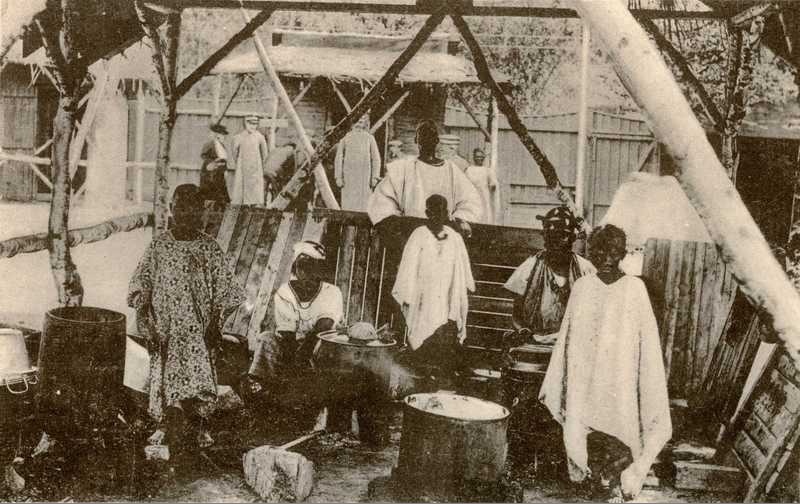
During European colonial expansion, Indigenous peoples were described as “monkeys,” “savages,” or biologically inferior. Black people were sometimes displayed in cages in Europe https://www.theguardian.com/world/2018/apr/16/belgium-comes-to-terms-with-human-zoos-of-its-colonial-past. Such language framed conquest as a civilizing mission rather than violent dispossession. Thinkers such as Aimé Césaire (1955/2000) and Frantz Fanon (1952/2008) argued that colonial systems depended on systematically denying the humanity of the colonized.

In the transatlantic slave trade, enslaved Africans were frequently depicted as animal‑like or naturally suited for bondage. Historian David Brion Davis (2006) documents how pro‑slavery theology and pseudo‑science worked together to rationalize exploitation. Orlando Patterson (1982) described slavery as “social death,” in which people were stripped of recognized personhood.

For people of faith, this colonial history demands humility. Scripture was often misused to justify systems that contradicted the biblical affirmation that all people are made in God’s image. Modern research shows the lingering effects of such imagery. Goff et al. (2008) found that implicit associations linking Black people with apes predicted greater acceptance of violence in simulated policing contexts. Dehumanizing metaphors do not fade harmlessly into history; they shape perceptions across generations.

Genocide and the Erosion of Moral Boundaries

The Holocaust offers one of the clearest examples of how dehumanization enables atrocity. Scholars such as David Livingstone Smith (2011) and Ervin Staub (1989) document how Nazi propaganda portrayed Jews as vermin or parasites. Anthropologist Alexander Hinton (2002) notes similar patterns across genocides: perpetrators first redefine victims as less than human. These patterns echo a biblical warning: when people are treated as objects or enemies rather than neighbors, violence escalates.

It is in this long history of dehumanization that we must view Donald Trump’s recent depiction of former President Barack Obama and his wife Michelle Obama’s heads on the bodies of apes in a jungle. This animalization mirrors earlier rhetoric in which he referred to immigrants as “vermin” or “animals.” Such language contributed to the justification of keeping immigrants in detention centers under horrendous conditions, because they were considered less than human and therefore undeserving of humane treatment.

Why This Matters for Faith Communities Today

Dehumanization rarely begins with violence; it begins with words, images, and small shifts in perception. Subtle forms—such as denying emotional depth to out‑groups (Leyens et al., 2000)—can gradually harden hearts. For communities shaped by faith, guarding language is not about political correctness; it is about spiritual integrity.

If every person reflects God’s image, then reducing anyone to an animal, a caricature, or a colonial stereotype contradicts that sacred truth. It erodes empathy, weakens the bonds of community, and dulls our responsiveness to suffering.

The consistent message across psychology, history, and theology is clear: seeing others as less than human makes injustice easier; seeing others as image‑bearers strengthens compassion and accountability.

In a polarized age, faith communities have an opportunity to model something different: speech rooted in dignity, disagreement without degradation, and conviction without contempt. To defend shared humanity is not only a social responsibility—it is an act of faithfulness to Scripture and to our calling as followers of Christ.


Picture credit: Africans exhibited at the 1914 Jubilee Exhibition in Christiania (Oslo), Norway, taken from : https://commons.wikimedia.org/wiki/File:Jubileumsutstillingen_1914_OB.F08939d.jpg

Selected Sources

Bandura, A. (1999). Moral disengagement in the perpetration of inhumanities. Personality and Social Psychology Review, 3(3), 193–209.
Césaire, A. (2000). Discourse on colonialism. Monthly Review Press. (Original work published 1955)
Davis, D. B. (2006). Inhuman bondage: The rise and fall of slavery in the New World. Oxford University Press.
Fanon, F. (2008). Black skin, white masks. Grove Press. (Original work published 1952)
Goff, P. A., Eberhardt, J. L., Williams, M. J., & Jackson, M. C. (2008). Not yet human. Journal of Personality and Social Psychology, 94(2), 292–306.
Haslam, N. (2006). Dehumanization: An integrative review. Personality and Social Psychology Review, 10(3), 252–264.
Hinton, A. L. (2002). Annihilating difference: The anthropology of genocide. University of California Press.
Kelman, H. C. (1973). Violence without moral restraint. Journal of Social Issues, 29(4), 25–61.
Kteily, N. S., & Bruneau, E. (2017). Backlash. Journal of Personality and Social Psychology, 112(4), 564–589.
Patterson, O. (1982). Slavery and social death. Harvard University Press.
Smith, D. L. (2011). Less than human. St. Martin’s Press.
Staub, E. (1989). The roots of evil. Cambridge University Press.

Leave a Comment

Lenten Devotions 2015: Will you please fetch me a donkey?

13818806203_9aca056616_zWe just celebrated Palm Sunday marking Jesus’ triumphant entry into Jerusalem with much fanfare. In the cacophony of hosannas and hallelujahs, much like the first Palm Sunday where Jesus came to Jerusalem, we often forget about the people who fetched a little colt for Jesus to ride. The Gospel according to Mark describes the event in this way:

“As they approached Jerusalem and came to Bethphage and Bethany at the Mount of Olives, Jesus sent two of his disciples, 2 saying to them, “Go to the village ahead of you, and just as you enter it, you will find a colt tied there, which no one has ever ridden. Untie it and bring it here. 3 If anyone asks you, ‘Why are you doing this?’ say, ‘The Lord needs it and will send it back here shortly.’”
4 They went and found a colt outside in the street, tied at a doorway. As they untied it, 5 some people standing there asked, “What are you doing, untying that colt?” 6 They answered as Jesus had told them to, and the people let them go. 7 When they brought the colt to Jesus and threw their cloaks over it, he sat on it. (Mark 11: 1-7 NIV).

We are not told who this colt belonged to except that he was willing to lend it to Jesus. However, what is more disappointing is that we are not told who these two men were whom Jesus sent out to fetch a donkey. We know that they were Jesus’ disciples. However, they remain anonymous in spite of their significant ministry. I am sure they had nobler ideas of a grandeur ministry and their role in the Kingdom of God than being sent to fetch a colt when they first accepted Jesus’ call to follow him. It was not an easy task. Imagine entering a village as a stranger looking like a suspicious animal thief! After locating the precise house and the right owner of the colt, they had to bring the untamed colt which no one had ever ridden before to Jesus Christ. They probably had to literally drag the colt out several miles away from its village. I am sure they thought that this is not what they had imagined being sent for when they heard Jesus call out to them: “Follow Me”!

These two disciples of Jesus teach us several things. First of all, the ministry is not ours. It’s the Lord’s ministry and we are called to prepare the way of the Lord. This must relieve us from unnecessary stress we often carry around in ministry. Secondly, in preparing for the Kingdom of God, no task is mundane and unbecoming of a servant of God who has answered Jesus’ call to follow him. If the Lord assigns us the task of only fetching a donkey for him, we should gladly and willingly do it for the Lord. As a matter of fact, this is what many of our ministries look like today—mundane, routine, boring, and without much joy or fruitfulness. However, they are all significant in God’s economy of salvation for the world. Whatever you may be going through in the little tasks of ministry, which seem like fetching a donkey, be encouraged that the Lord is using each one of them for his work of redeeming the world and establishing his Kingdom on earth. May you be encouraged by this fact today. Amen.

Leave a Comment

Mission in the Midst of Madness (Part 4)

Peace

Jesus Christ’s mission on this earth is the foundation of our mission today. One of the neglected aspects of Jesus’ mission is that of peacemaking and peacekeeping.  This aspect of his mission clearly shows us Jesus’ approach to violence and evil which was prevalent in his world as it is in our time. Social evils, bigotry, zealotry of all kinds including “terrorism” and “holy war,” banditry, class conflicts, foreign occupation, colonization, hostility between Jews and Romans, and Jews and Samaritans, fanaticism, and so on, were all present in the time of Jesus. He had to deal with them in the same way that we encounter these issues in our lives today. Jesus’ command to love and to work for the peacemaking was his response to the current events of violence and hatred in his day. He wanted to show both Jews and Romans that the peace that he has come to establish comes through love, acceptance of enemies, and unlimited forgiveness than revengeful violence or military might.

We have taken the Great Commission seriously and have crossed difficult geo-political and cultural boundaries in carrying the gospel to the ends of the earth. However, the church has often neglected the command of Jesus Christ to love our enemies and have failed to preach the good news of peace through Jesus Christ, which is an intrinsic aspect of Christian mission. If we fail in following Christ in this aspect, then we are guilty of neglecting his mission.

In the passion narrative of the gospels, Jesus refused to retaliate even in his self-defense. Jesus healed the servant of the high priest who was struck by one of his disciples fully knowing that the high priest had sent them to arrest and condemn him to death (Luke 22:50-51). At the cross, Jesus prays for his executioners (Luke 23:34). Stephen literally follows the example of his Master by praying for those who stoned him to death (Acts 7:60). Even after his resurrection and gaining a glorified body, Jesus does not go after the Jews who conspired to crucify him or the Romans who carried out his execution. If the history of the church narrated in the book of Acts of the Apostles shows us anything, it’s that although the fledgling church lived in the midst of hatred and violence, it made sure that peacemaking was an integral part of their missional existence in a world full of hatred. This struggling church was always on the move and outward looking in its mission. Their inner spiritual life of the followers of Jesus was always connected to and manifested in the outer world of sin and violence.

What was true of the Master must also be true of his followers today. We have no option but to make peacemaking and peacekeeping an integral part of our missional existence as a church of the Lord Jesus Christ. Jesus showed it and the world needs it!

Leave a Comment

Mission in the Midst of Madness (Part 3)

James_Tissot_The_First_Nail_525

Christian mission, which took birth in the violence inflicted upon Jesus Christ and his subsequent resurrection, has always had violence hover over it as Christians tried to obey the Great Commission of their Lord Jesus Christ. That is why I have often said that Christians should not be surprised by the violence we see around us. Mission cannot remain unscathed from the prevalent violence in the context of which mission is practiced. Nevertheless, violence also should not deter us from carrying out the mission God has called us to. As the gospel and well-established human assumptions and reflexes interact with each other it is bound to produce some sort of violence. That is why Jesus has given his Kingdom ethics to deal with the context of violence in which mission is practiced. Nothing summarized it more than the Sermon on the Mount (Matthew 5-7).

Particularly in the current context of violence and counter-violence, hate, domination, terrorism, and counter-terrorism, it has become imperative for the church on God’s mission to return to the ethics taught in the Sermon on the Mount. And to reflect upon it afresh and to confess that our failure to live according to the superlative demands of this ethics does not really absolve us from living the kingdom life here and now. The church does not have the liberty to exclude either violence or kingdom ethics from its missiological agenda even though it has tried to do so in the past. God’s mission has never been concerned with just the personal, spiritual, inner conversion of people’s lives; therefore, the church’s mission cannot be confined to only the spiritual conversion of human being and making their relationship right with God. So, the mission cannot stay apolitical because Jesus Christ and his sermon on the mount were certainly not apolitical because they challenged traditional structures and assumptions of every society. Jesus and his Sermon on the Mount challenge us to practice Christian mission beyond just “saving souls.” Our mission in today’s context must be political in the sense of peacekeeping, peace-making, working toward reconciliation and justice, dissuading people from seeking vengeance, and above all loving our enemy as Jesus exemplified in his life, deeds, and ultimately in his death upon the cross. Without this last act, Jesus’ Sermon on the Mount would have remained just a hollow sermon without any practical meaning for us. But we know that the Sermon on the Mount, in the words of Lapide P., “gets its true binding force only through the exemplary life, sufferings, and death of the Nazarene who sealed its validity with his own blood” (Sermon on the Mount: Utopia or Program for Action?, 1986: 141). May the Lord give us the grace and strength to take part in the mission that he began in his earthly life. Amen.

Leave a Comment

Mission in the Midst of Madness (Part 2)

https://www.youtube.com/watch?v=rylsA5_0jcM#t=116

Mission in the Midst of Madness (Part 2)

In my last post I pointed out that violence should not surprise us, as it does not surprise God who is familiar with it from the beginning. Today, I would like to share that Christian missions, too, was born in dreadful violence and calls us to diligently engage in God’s mission.

In the last days of his earthly ministry, Jesus was pursued by men who wanted to see him dead. At Passover, in his last journey to the Temple in Jerusalem, Jesus was so enraged by what he saw there that he got violent as he cleansed the temple. The spiritual and physical degradation of the people of God was at display in all its brazenness in the temple—“a house of prayer for all the nations”—turned into “a den of robbers” (Mark 11: 17). While Jesus’ startling behavior infuriated the religious leaders of the day, the common people responded by flocking to him. In Jesus, they saw a prophet who would restore the temple as “a house of prayer for all the nations” (Mark 11: 17-18). Jesus’ aggressive actions, however, also forced the Jewish leaders to act on their violent intentions against him that finally led to his execution at Calvary.

Jesus Christ suffered one of the most gruesome last hours on his journey to the cross at Calvary. Mel Gibson’s famous Hollywood film, The Passion of the Christ (2004), helps us understand some of that torture inflicted on Jesus and yet we will never fully fathom what a vicious death Jesus died for us.

It is in this violence, suffering, and his death on the cross, that Christian mission was born. Without the death and resurrection of Jesus Christ, we do not have any good news to share and no reason to call humanity to be restored and reconciled to God and to fellow human beings. Without the death of Jesus on the cross, there is no hope for the chaotic world. And this, I submit, is the greatest paradox of Christian mission: that God, in his sovereignty, would let Calvary become the fountain of our salvation, restoration, reconciliation, and eternal peace! Yes, I know, it is incomprehensible. Nevertheless, it is the Lord’s doing and it’s marvelous in our eyes.

Therefore, in the context of violence today, the followers of Jesus Christ who are also called to be witnesses of his death and resurrection, must take courage and strength from this paradox. We, who are his witnesses, should not be surprised by the violence and also should not shy away from sharing the good news. Let the violence around us not deter or overwhelm us from sharing and persuading people into restoration, salvation, and reconciliation. Let us persistently look unto God, the author and finisher of our salvation, and trust him to turn the violence and suffering into something beautiful for his Kingdom, because only God alone can do it. So, while it is easy to sing “I’ll cling to the old rugged cross” sitting in our comfortable pews of cathedrals, but very difficult to take the message of the cross to a violent and hurting world outside. However, the Great Commission of the One who died on the cross is not to sit and sing alone but to “go into all the world and proclaim the good news to the whole creation” (Mark 16: 15).

Leave a Comment

Mission in the Midst of Madness

madness

Mission in the Midst of Madness

Just a few days into the New Year and we have already witnessed the brutal killing of writers and cartoonists inside their office by Islamic terrorists. Another more gruesome killing, which the western media did not cover as much, happened almost at the same time in Nigeria. A terrorist organization, Boko Haram, which had captured at least 300 girls, is now reported to have slayed over 100 innocent people and torched about 16 villages in Nigeria. These are just two major incidents in the first week of this New Year. Many more around the world are now going through some of the most gruesome violence either for their faith or for no apparent fault of their own. It’s in this context that we as Christians are called to take part in, and carry out the Missio Dei— mission of God.

Mission is always done in context; otherwise, mission has neither relevance nor any meaning. Our context of livid violence by human beings against each other challenges us to reflect on how we are to participate in God’s mission. First and foremost, let us not despair by what we see around us. This should not surprise us as we live in a fallen world marred by sin and violence. However, in this mad world, God, the one who calls us to missions, remains the same—the Unchanging One. Remember, when God began his act of creation the world was in a chaos (Genesis 1: 1-3). The earth was formless, in disorder, in darkness, and void. Over this chaos, God declared: “Let there be light” and there was light! From this day on, God’s Word has been creating order, meaning, light, and life in our world. And God is still alive. He is still on His throne. God is still on this mission of restoring wayward humanity to Himself. And what’s more important is that God calls us puny mortals to come with nothing but faith to participate in this mission of restoration and reconciliation. We need to call people to trust in this creator God by persuading them through both our words and deeds. Nothing else but the love of Christ should constrain us to be engaged in this calling. In the words of Apostle Paul,

“Therefore, knowing the fear of the Lord, we try to persuade others; ….For if we are beside ourselves, it is for God; if we are in our right mind, it is for you. For the love of Christ urges us on, because we are convinced that one has died for all; therefore all have died. And he died for all, so that those who live might live no longer for themselves, but for him who died and was raised for them” ( II Corinthians 5: 11-15).

It is our privilege to participate in God’s mission of restoration and reconciliation, as this is the need of the hour today more than ever. The context in which we are living in makes this mission even more meaningful and relevant than anything else in the world. It is more important than the numbers we seek, more important than church growth, and more important than our own little kingdoms, name and fame. In these words of Apostle Paul, our mission today as ambassadors of God, is calling people not to ourselves but to God alone:

“All this is from God, who reconciled us to himself through Christ, and has given us the ministry of reconciliation; that is, in Christ God was reconciling the world to himself, not counting their trespasses against them, and entrusting the message of reconciliation to us. So we are ambassadors for Christ, since God is making his appeal through us; we entreat you on behalf of Christ, be reconciled to God. For our sake he made him to be sin who knew no sin, so that in him we might become the righteousness of God” (II Corinthians 5: 18-20).

I hope to reflect on mission and violence further… stay tuned! 🙂

1 Comment

The ‘wordle’ below describes what interests and keep me occupied!

If only I had the time and energy to do all or even some of it! ;-0

Links to some great websites on mission and missiology:

https://www.emsweb.org/

http://fuller.edu/cmr/

http://missionstudies.org/archive/7liais/societies.htm

http://missionstudies.org/index.php/journal/missiological-journals/

http://www.asianmissiology.org/

http://www.globalmissiology.org/

http://mis.sagepub.com/

http://www.brill.com/exchange

Leave a Comment

You have successfully subscribed to our blog. Thank you!

There was an error while trying to send your request. Please try again.

You agree to receive posts and updates from this site through the above email Id.