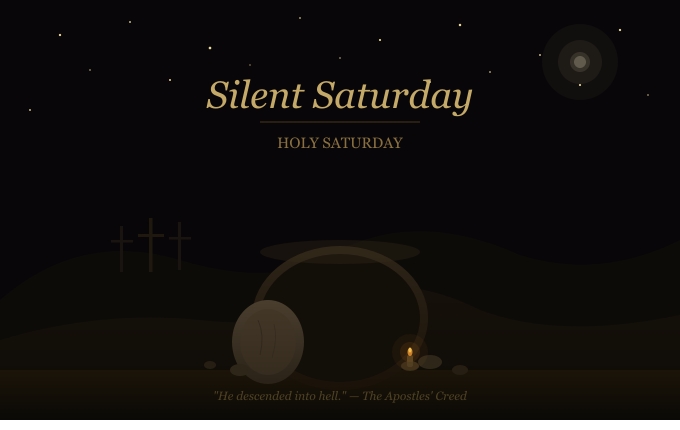
Today marks the final day of the Lenten journey — Holy Saturday, often called Silent Saturday — a day of rest and preparation for the Resurrection. And yet, for all its weight, nobody quite knows what to do with it.
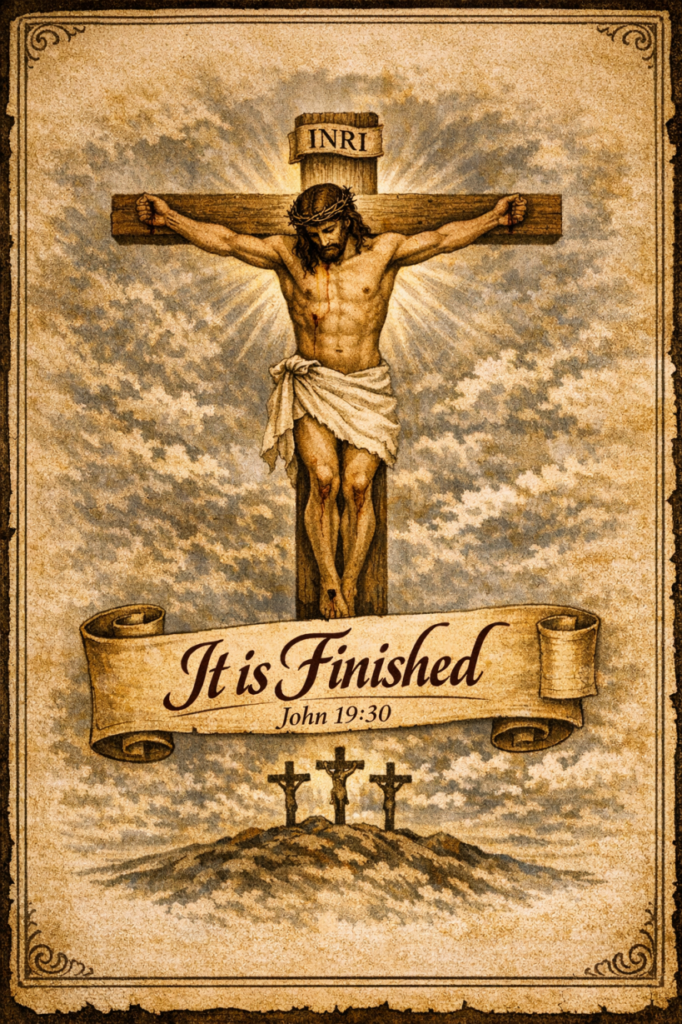
Good Friday has its gravity—the cross, the darkness, the cry of dereliction. Easter has its trumpets. But the day in between just sits there, quiet and strange. The altars are bare. There is no Eucharist, no alleluias. In the old liturgical rhythm, not even a candle is lit. It is the one day of the Church year when the world is simply asked to wait—and waiting, as most of us know, is its own kind of suffering.
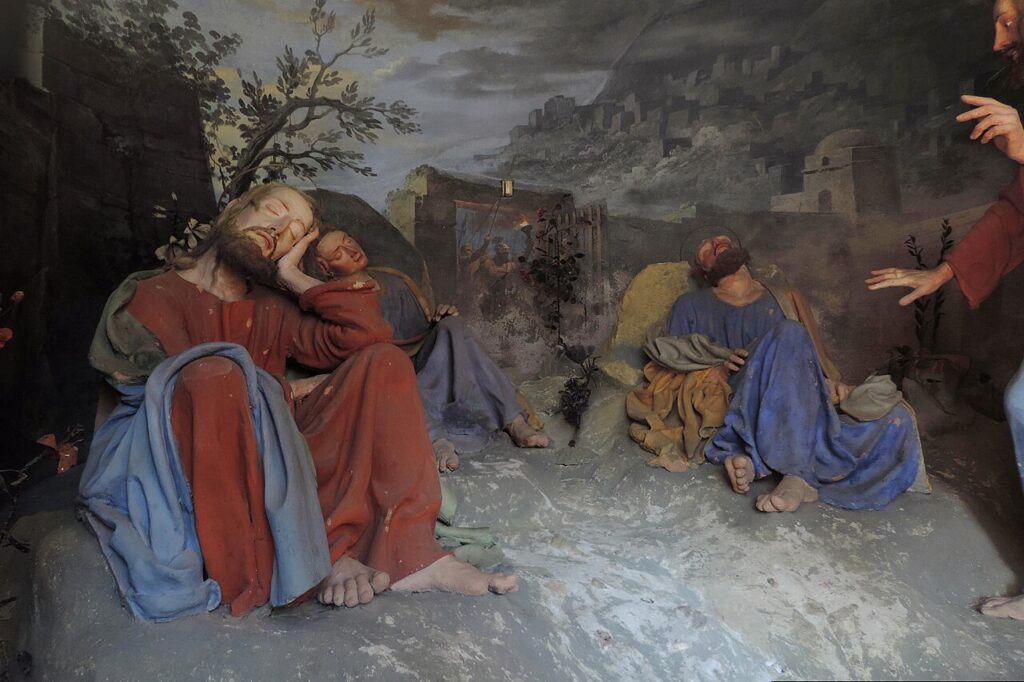
Jesus’ disciples certainly found it so. They scattered. They hid. Whatever they had hoped Jesus was, it seemed finished.
But the oldest Christian confession dares to say otherwise. The Apostles’ Creed, in its spare and careful language, declares that after His death, Christ “descended into hell.” Certain Christians anchor this in specific texts, such as, 1 Peter 3:18–20, Ephesians 4:8–9, Acts 2:27, and Matthew 12:40.
However, the original Latin word is inferos, meaning the realm of the dead. The Greek and Hebrew terms, Hades and Sheol, also mean the common realm where human souls go when they leave the body. Therefore, in the Creed, “hell” is not the place of final punishment, but the realm of the dead—the place every human goes. Christ went there because He went everywhere humans go. Jesus did not sidestep death or hover above it. He entered it—all the way in, just as He entered everything else about our condition.
What happened there is where different Christian traditions diverge—and they do so honestly. Eastern Orthodox have long treasured an icon of Christ standing on the splintered gates of Hades, reaching down to pull Adam and Eve out of the dark—a picture of Easter that begins before the stone ever rolls away. Medieval theologians spoke of the righteous dead, the patriarchs and prophets, finally receiving what they had only seen from a distance. Calvin argued the “descent” was not a journey at all but the depth of spiritual suffering Christ endured on the cross—the hell He absorbed so we would not have to bear it. Still other scholars read 1 Peter 3 as Christ declaring His victory to fallen spiritual powers — a proclamation not of mercy but of conquest.
The honest answer is that Scripture leaves this in partial shadow. And perhaps that is fitting. Holy Saturday is, by its nature, the day we cannot fully see into.
What we can say is this: the silence was not emptiness. Wherever Christ was on that Saturday, He was not a victim waiting to be rescued. He was moving through death with the same intention He brought to everything—purposeful, sovereign, undefeated even in the grave.
That matters for more than theology. Most of us know what it is to live in a Saturday season—after something has broken, before anything has been restored. The prayer that hasn’t been answered. The diagnosis that changed everything. The relationship that ended without resolution. The long, grinding wait when Friday’s wound is still fresh and Sunday feels like a rumor.
Holy/ Silent Saturday does not offer cheap comfort. It does not rush you toward the resurrection or tell you to cheer up. What it offers is something stranger—and more solid—than that: the assurance that Christ has already been into the darkest place you’re facing. He didn’t send a message from outside it. He went in. He holds, as He told John, the keys of death and Hades. He didn’t borrow them. He took them.
So, sit in the stillness today if you need to. Name the things that feel sealed and cold. And remember—the silence outside the tomb was not the silence of a story ending. It was the silence before a door flew open from the inside.
He is already there.
The stone will move.