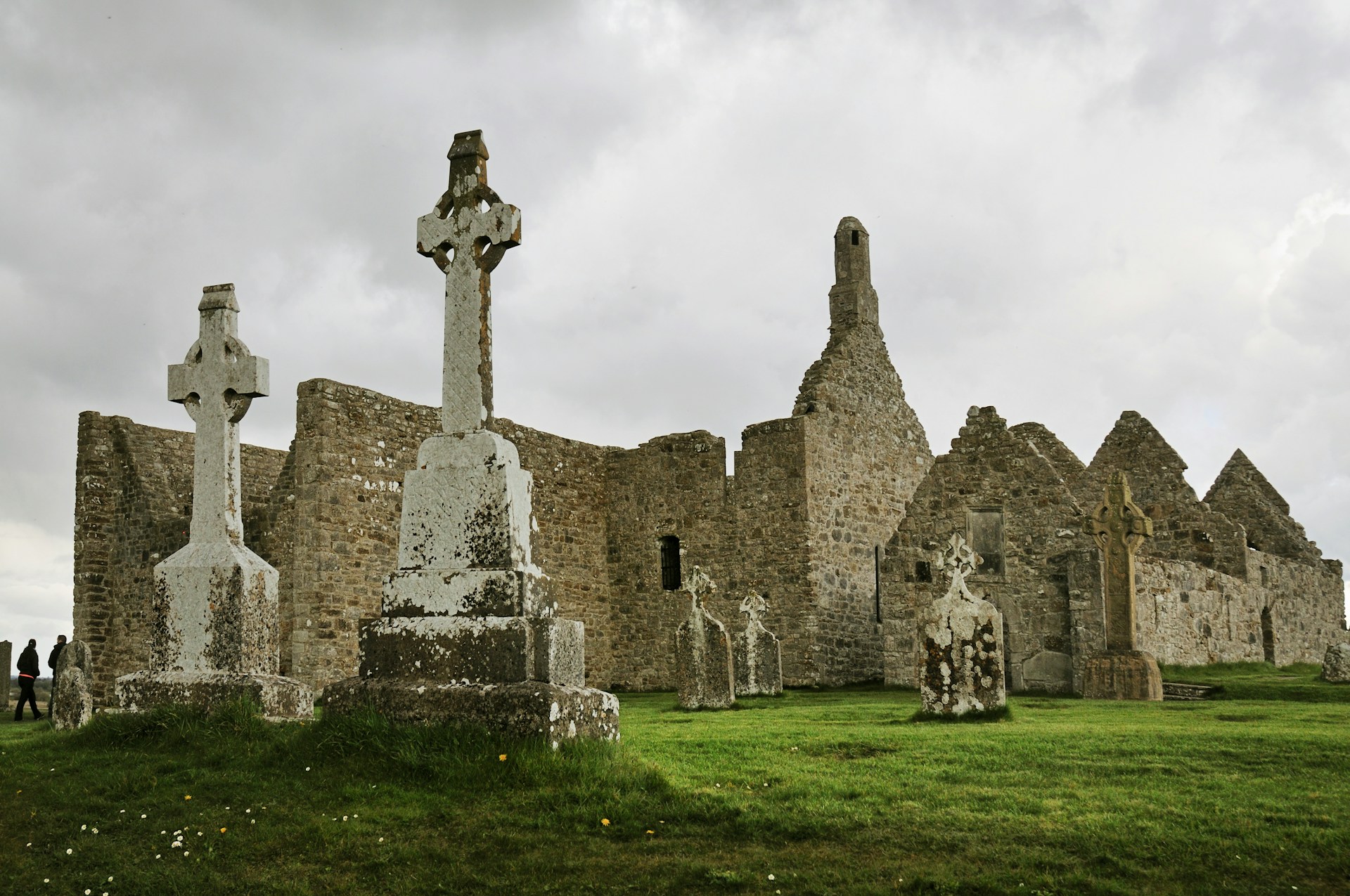
Photo by Gérard GRIFFAY on Unsplash
I’ll be honest with you: I used to be obsessed with going back.
Back to the apostles. Back to the early fathers. Back to some imagined “pure” moment when the faith was untouched by the messiness of culture and time. I suspect I’m not alone. It’s this quiet anxiety that plagues so many serious Christians today: this desperate longing for a theological photograph that is clear, complete, and frozen.
But the longer I’ve walked with Scripture and history, the more convinced I am that that photograph never existed.
Trying to restore it, however well-intentioned, is built on a myth.
Christian tradition has never been a still image. It’s a living story — carried forward by the Spirit, shaped by centuries of messy encounters, and currently unfolding. To treat the past as a destination isn’t faithfulness.
The Foundation Is Real — But It’s Not the Whole House
The apostolic foundation is non-negotiable. The creeds, the canon, the sacraments — they anchor us to the life, death, and resurrection of Jesus. The councils of Nicaea (325 AD) and Chalcedon (451 AD) were decisive.¹ The creeds are guardrails for our faith.
But here’s where we trip up: we confuse the foundation with the building.
No architect mistakes the slab for the house. The patristic era gave us the foundation. The Spirit has been building ever since.
Pelikan captured it precisely: *”Tradition is the living faith of the dead; traditionalism is the dead faith of the living.”*² Tradition breathes. It grows. It has never — not once in two thousand years — stopped moving.
The Gospel Moves by Meeting People, Not Copying Them
From the beginning, the pattern has been the same: the Gospel walks into a new world, and both the Gospel’s expression and that world change.
When Christianity moved from Jewish Palestine into the Greco-Roman world, Justin Martyr and Origen didn’t just translate words. They engaged Greek philosophy head-on, showing how the Logos of John’s Gospel actually answered the deep, aching questions of the philosophers.³ That wasn’t compromise. That was faithful interpretation taking a new context seriously.
When the Gospel hit North Africa, it birthed Augustine — arguably the most influential theologian in Western Christianity. But his thoughts on grace, sin, and time weren’t formed in a sterile lab. They were forged in his African context, his restless heart, and a spiritual journey that gave us one of the most honest autobiographies ever written.⁴ The Spirit works through the particular — through one man’s specific scars — to create something universal.
And when the faith reached the Celtic world, it developed a spirituality of creation, pilgrimage, and holy wandering that looked nothing like Roman Christianity.⁵ Different accent but the same Gospel.
From Wittenberg to Azusa to Lagos
The Reformation was another such encounter. Luther, Calvin, and the Anabaptists were not discarding tradition — they were excavating dimensions of the apostolic witness buried under centuries of institutional weight.⁶ They gave us the priesthood of all believers: the radical insistence that every ordinary person stands before God without needing a human middleman.
Then came Azusa Street. 1906. Los Angeles. Among the poorest and most marginalized people in the city, the Pentecostal movement erupted — a spirituality of immediacy, insisting that the Spirit’s power wasn’t a relic of the apostolic age but a present, available reality.⁷ Today, Pentecostalism is the fastest-growing expression of Christianity on earth. The Spirit, it turns out, didn’t ask for our permission.
And now? The biggest shift isn’t happening in Europe or North America. It’s happening in Africa, Latin America, and Asia. As numerous scholars of World Christianity are documenting for the church to see: the Global South isn’t just receiving Christianity, rather it’s reshaping it.⁸
African theologians like John Mbiti have argued that indigenous understandings of God didn’t need to be bulldozed for the Gospel to take root. They prepared the ground for it, just as Greek philosophy did in the ancient world.⁹ These voices read the Beatitudes not as pretty poetry for the comfortable, but as words spoken directly to the genuinely poor. They read the Psalms of lament not as metaphor but as the cries they hear in their own neighborhoods. In doing so, they’re returning something to the whole church — a dimension of Scripture that Western Christianity, in its relative comfort, had quietly set aside.
This isn’t theological relativism. It’s the Spirit doing exactly what the Spirit has always done.
A Living Flame, Not a Museum Piece
Yves Congar described tradition as a living transmission — not a preserved specimen in a jar, but a living flame passed from hand to hand across the centuries.¹⁰ The flame is the same, every hand holding it is different.
That image is both freeing and terrifying.
It’s freeing because we aren’t responsible for running a museum. But it’s terrifying because we are responsible for carrying that flame faithfully — discerning what is a genuine encounter with the Spirit and what is simply the culture co-opting the Gospel for its own ends.
That discernment is hard. It is the hardest thing the church is ever asked to do. History is littered with moments where the church mistook its own cultural preferences for the Spirit’s movement — and just as many where it mistook rigidity for faithfulness. Both errors hurt. We won’t always get it right. But refusing to engage isn’t neutrality; it’s quitting.
What This Actually Asks of Us
It’s uncomfortable to admit that our understanding of God is still growing. It takes a humility that doesn’t come naturally to people who love certainty to accept that we aren’t the final chapter. We’re participants in the next one.
The question for our generation isn’t just, “What did the early church believe?” That question is necessary. But it’s not enough.
The real question is: How is the Gospel encountering our world right now — and what part of its inexhaustible truth is being revealed through that encounter?
Every generation that asked this honestly found something.
Jerusalem taught us Jesus fulfills Israel’s story. Athens taught us He is the ground of all reason. Africa gave us Augustine’s depth of grace. The Reformation gave us the priesthood of every believer. The Global South is teaching us — right now, if we’re listening — to read Scripture from below, from the margins, from the place of need, not power.
This is the tradition we have received. This is the tradition we are called to carry forward. Not as museum curators dusting off old artifacts, but as faithful witnesses.
Where do you see the Spirit speaking a “new accent” in your own context today? Is there a cultural encounter your community hasn’t fully taken seriously yet? I’d love to hear your thoughts in the comments.
Notes & References
¹ For an authoritative treatment of the early councils and their doctrinal significance, see Pelikan, Jaroslav. The Christian Tradition: A History of the Development of Doctrine, Vol. 1: The Emergence of the Catholic Tradition (100–600). University of Chicago Press, 1971.
² Pelikan, Jaroslav. The Vindication of Tradition. Yale University Press, 1984, p. 65.
³ Gonzalez, Justo L. The Story of Christianity, Vol. 1: The Early Church to the Dawn of the Reformation. HarperOne, 2010, pp. 52–68.
⁴ Brown, Peter. Augustine of Hippo: A Biography. Revised Edition. University of California Press, 2000. See also Augustine. Confessions. Translated by Henry Chadwick. Oxford University Press, 1991.
⁵ Cahill, Thomas. How the Irish Saved Civilization. Anchor Books, 1995, pp. 148–179.
⁶ McGrath, Alister E. Christianity’s Dangerous Idea: The Protestant Revolution. HarperOne, 2007, pp. 1–22.
⁷ Synan, Vinson. The Holiness-Pentecostal Tradition: Charismatic Movements in the Twentieth Century. Eerdmans, 1997.
⁸ For a succinct history of this discipline and latest reference list, see Kim, Kirsteen. “What Does World Christianity Mean for Mission Studies? Explorations in Christianity Worldwide.” International Bulletin of Mission Research 49, no. 4 (2025): 280-296. https://doi.org/10.1177/23969393251359837
Jenkins, Philip. The Next Christendom: The Coming of Global Christianity. Oxford University Press, 2002, pp. 1–14.
⁹ Mbiti, John S. African Religions and Philosophy. Heinemann, 1969. See also Mbiti, John S. Bible and Theology in African Christianity. Oxford University Press, 1986.
¹⁰ Congar, Yves. Tradition and Traditions: An Historical and a Theological Essay. Macmillan, 1967.
Vinod John writes at the intersection of theology, history, and lived faith. You can follow along at his website on on Medium/Substack
Be First to Comment